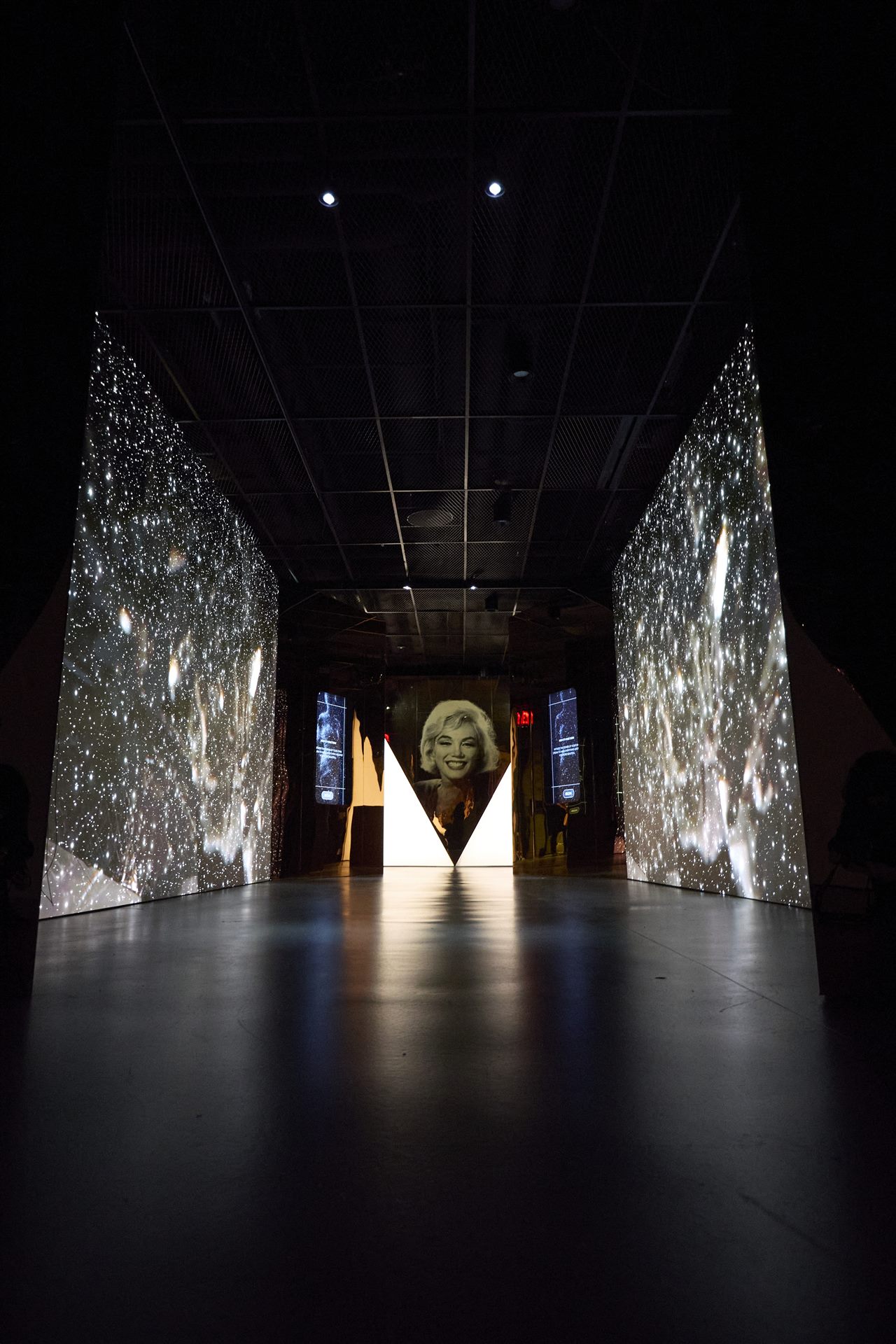
Genesis House's centennial exhibition needed three interactive moments inside a six-space narrative arc: a participatory finale where visitors record a “manifestation” of their own, an archival audio experience built around Marilyn's own voice, and the means to run both daily, for nine weeks, in a flagship brand space with no technician in the room. On paper, that reads as “interactives.” Sitara Systems served as Creative Technologist to Matte Projects (prime), developed in partnership with Authentic Brands Group, steward of the Marilyn Monroe estate; Matte designed the exhibition, and Sitara designed the systems-architecture layer underneath its interactive moments — the work of human-computer interaction applied to physical space, where visitors, archival media, and the building itself meet.
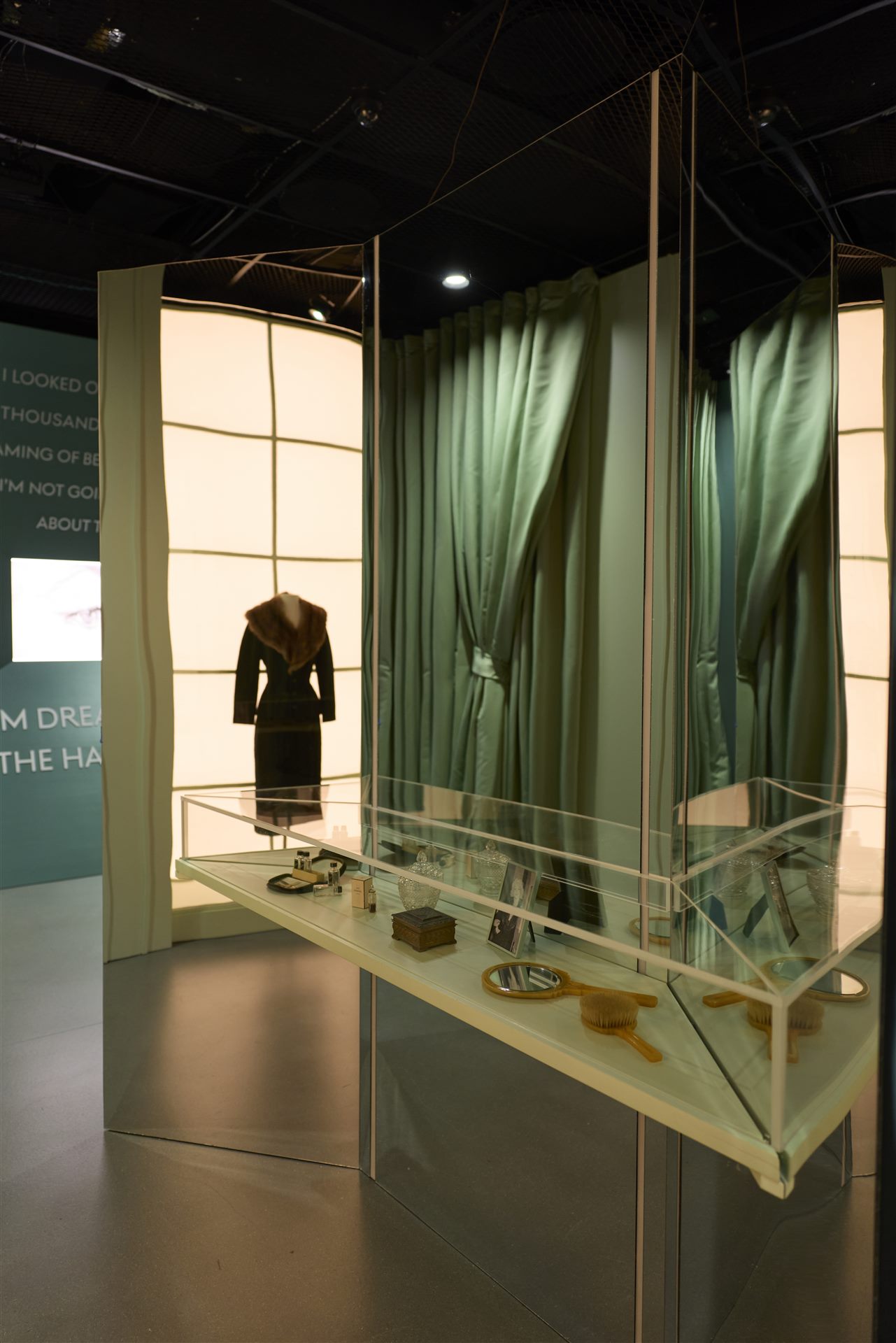
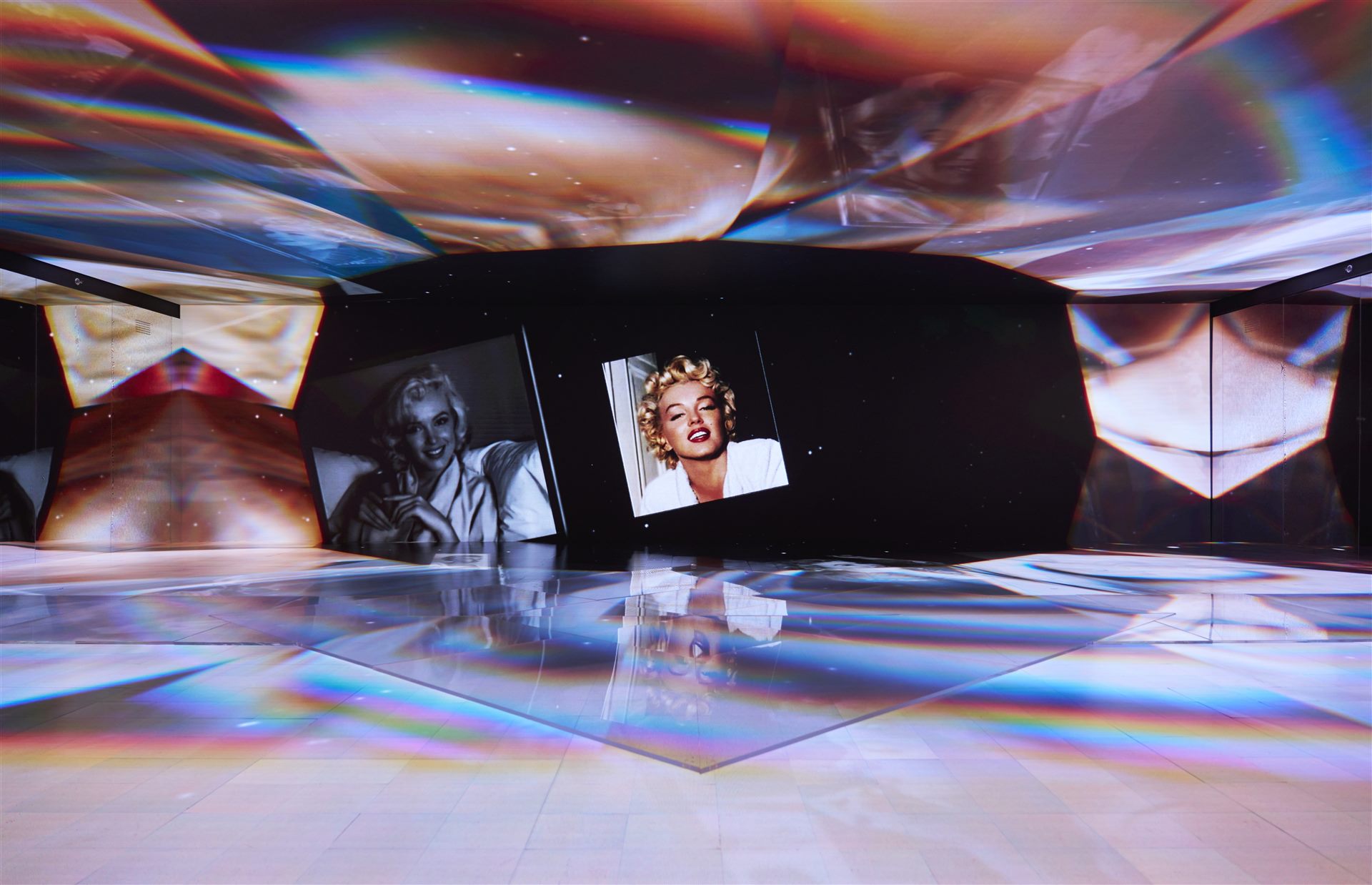
The exhibition earns the word “museum” rather than “experience” because it holds both halves of that word at once: rooms of archival material — garments and personal objects from The Marilyn Monroe Collection, staged in the Vanity room — sit alongside large-format immersive media built to the same production standard, including a floor-to-ceiling LED environment in the Screen Experience room. Sitara's systems live in the second half, not the first — the interactive and archival-audio moments, not the projection stagecraft — but the whole space was built to the standard that makes the interactive layer feel earned rather than bolted on.
What does it mean to invite a stranger's handwriting onto a luxury brand's walls? The New Beginnings Hall asks visitors to draw or write a wish for their own next chapter and watch it appear at architectural scale. Before that is a display question, it is a behavioral one: open contribution in an unstaffed space only works if the system can be trusted with whatever a visitor draws. Every submission is screened by an AI content-moderation model in Sitara's platform layer before it reaches the wall — and the system is designed so that uncertainty never defaults to approval. The screening happens in seconds, inside the natural pause between finishing a drawing and looking up.
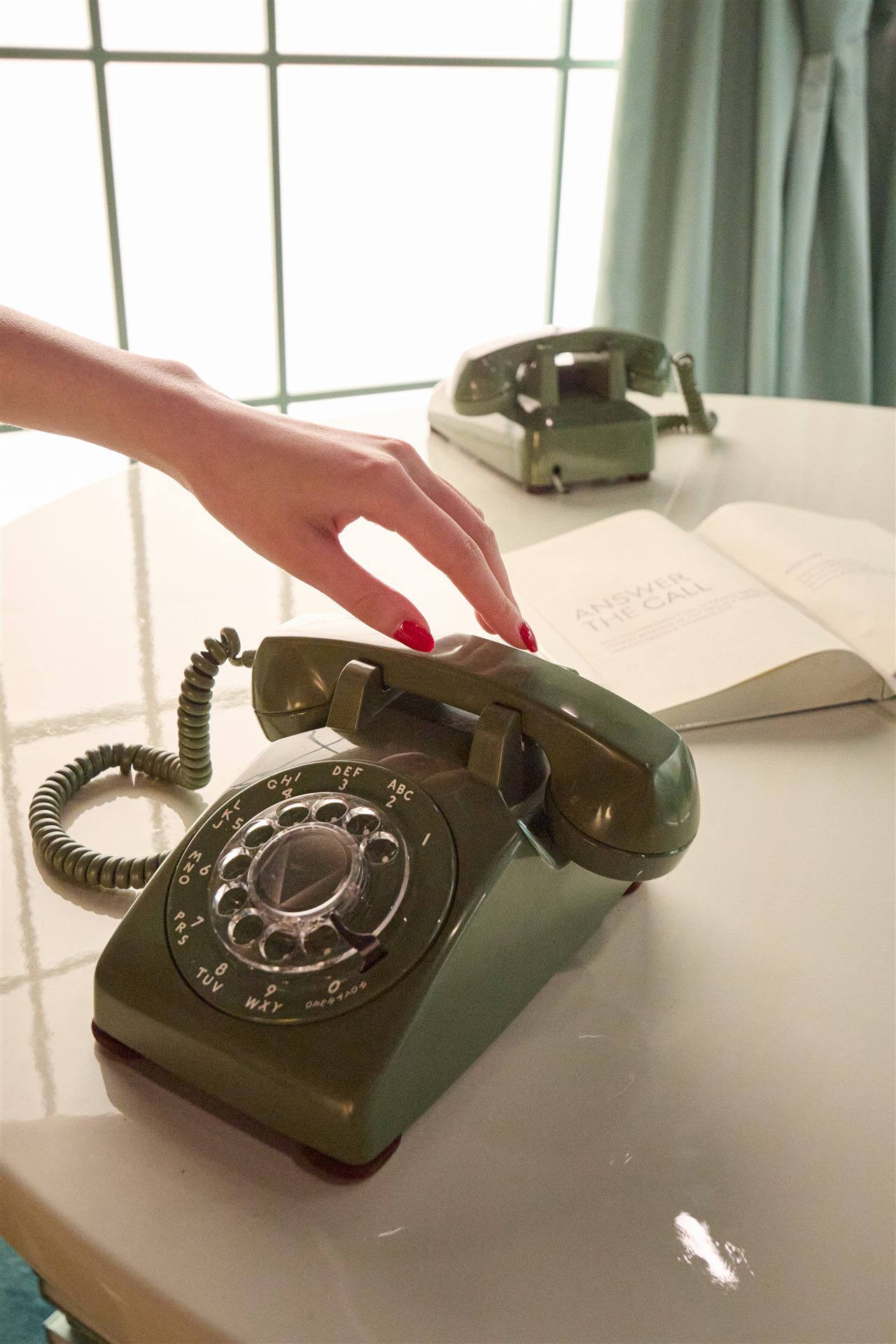
What is the right interface for hearing a voice from 1962? Four Western Electric Model 500 rotary phones play Marilyn's final interviews when a visitor lifts a handset. The design decision was to treat the telephone as what it already is — one of the most legible interfaces ever placed in a room. No hidden buttons, no screens: lifting the handset is the interaction, and the exhibition can also ring a phone to draw a visitor across the space. The estate's terms required her audio to play unedited; the interaction honors the constraint instead of designing around it.
How does a 30-second sketch become an act of self-authorship? The exhibition's thesis is that Marilyn manifested her future deliberately. The wall enacts that thesis: each approved drawing redraws itself in light, stroke by stroke, in the order the visitor's hand made it — their own gesture repeated at room scale — then holds, and disperses to make room for the next person's. The curatorial metaphor lives in the behavior of the system, not just the wall text.
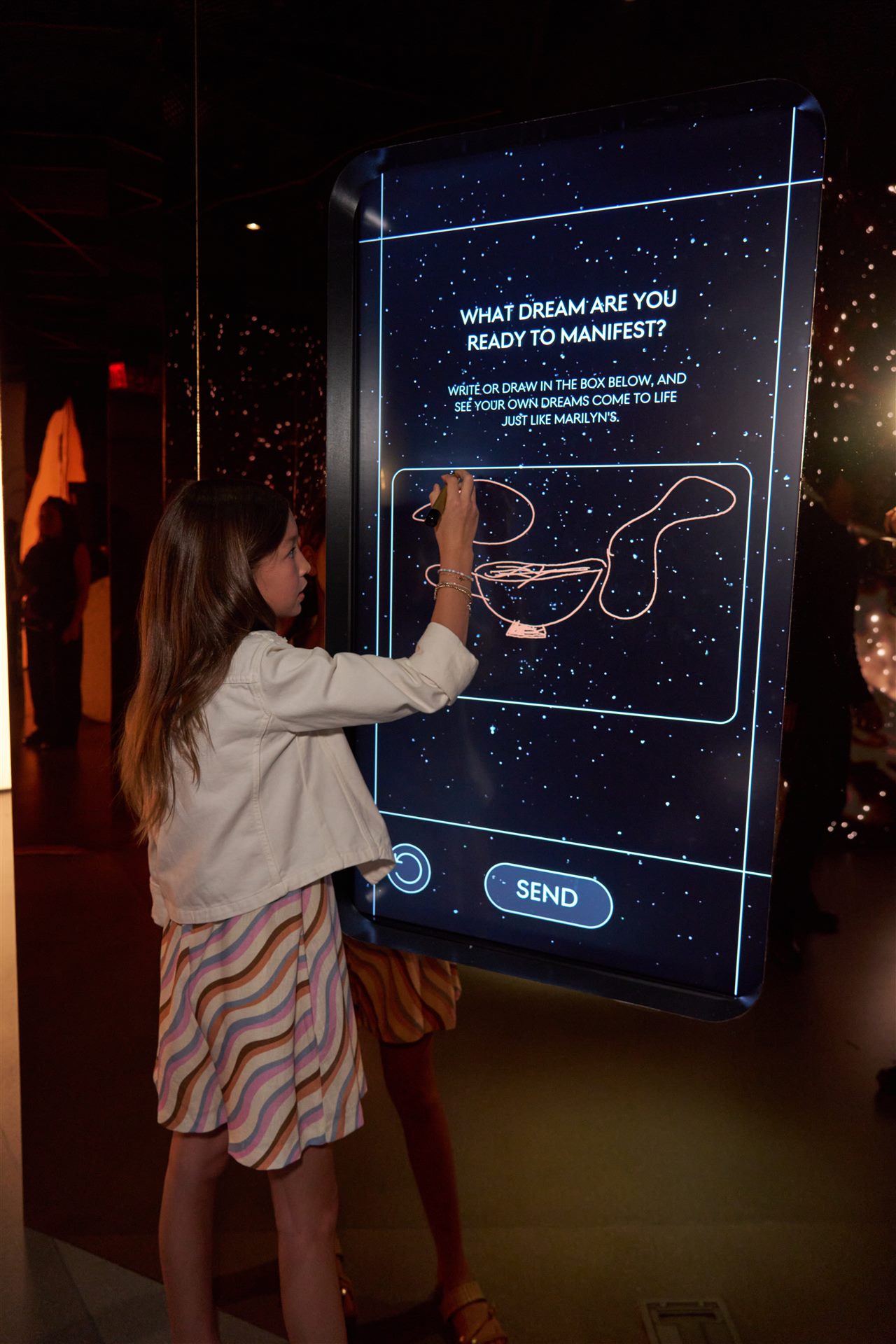

And how does it run every day through August 2, with no technician in the room? A nine-week tentpole was built with the same lifecycle strategy Sitara applies to permanent installations designed for 12+ year operational life: all three pieces run under Sitara's operations layer, which monitors, recovers, and reports without anyone standing next to the work. What that adds up to: four drawing stations; a two-screen wall where visitors' contributions live; a four-phone archival audio installation that the exhibition itself can call; and the screening, analytics, and operations infrastructure underneath all three.
Genesis House presented it as the only standalone Marilyn Monroe centennial installation in New York City. Event Marketer's review singled out the moments Sitara built: the rotary phones “keep the experience focused on Monroe's humanity,” and visitors at the wall watch their wish projected “in a nod to Monroe's famous habit of manifesting her future.” A nine-week brand activation gets built to the same discipline as a decade-long museum installation, or it doesn't get built by us.