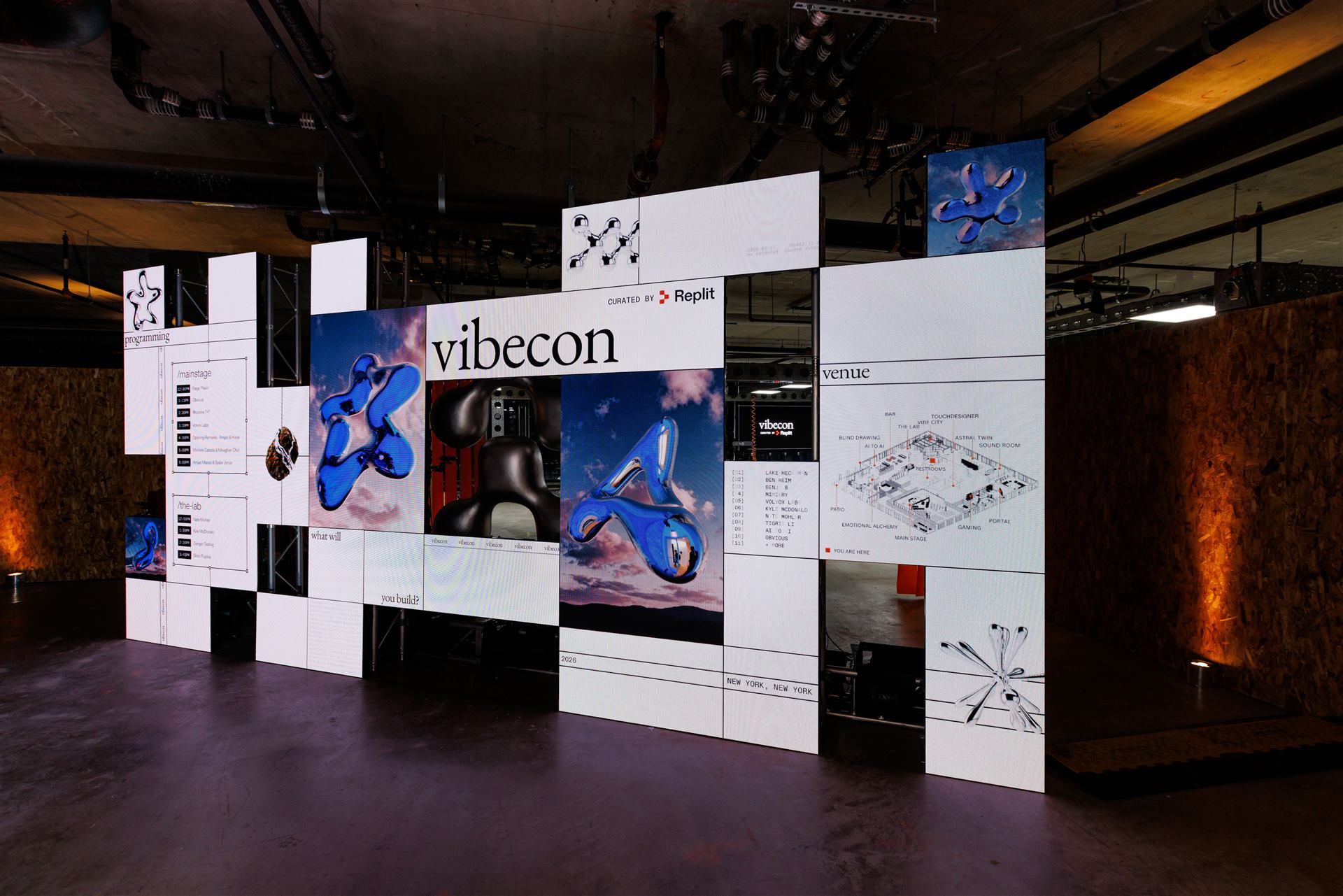
When Replit staged its first Vibecon — a two-day creative conference at Canyon on Manhattan's Lower East Side in June 2026, built on the premise that code is becoming a creative medium — it needed the premise to be true in the room, not just on stage. Sitara served as technical director and production team for all of the conference's interactive and immersive elements: designing and building three areas of its own in collaboration with Replit — the Game Room, the Sound Room, and AI2AI — and managing the production of every other art piece at the event. Replit's own recap captures the result.
Each room made the premise concrete in a different register. In the Game Room, visitors sat down at stations and played browser-based games developed on the Replit platform — a working demonstration of what vibe coding, Replit's flagship term, can produce. AI2AI was a set of eight displays, each showing two AI agents debating a question about AI's role in the modern world.
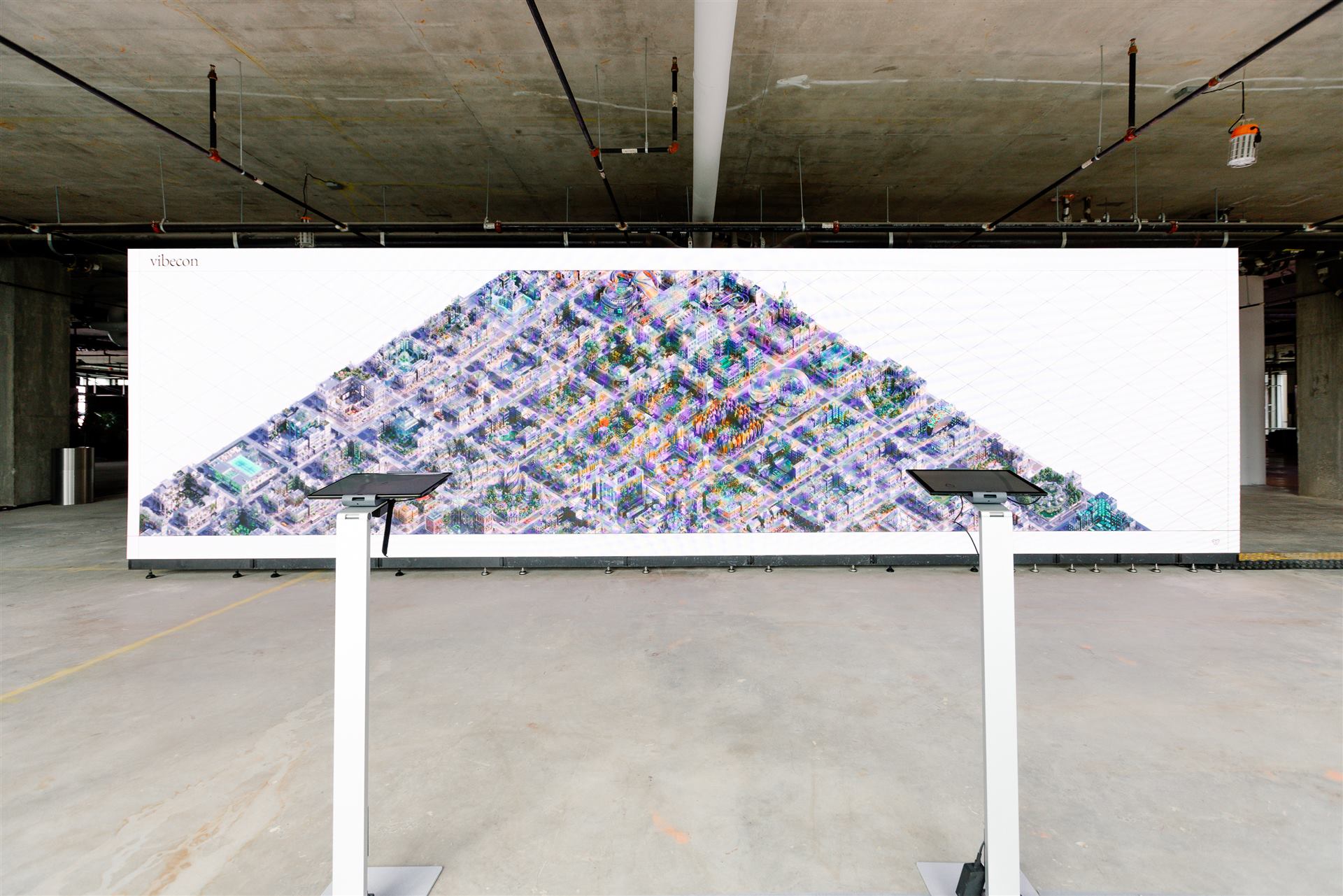
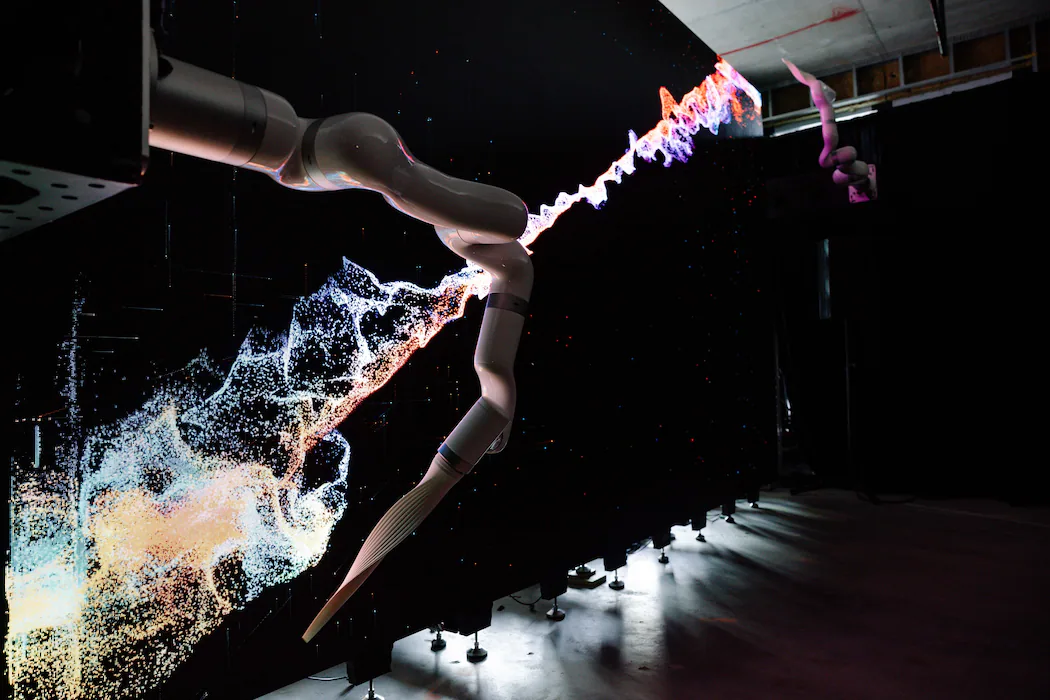
Running a floor of live AI installations for two days is an operational problem before it is a creative one: seven live installations — three of Sitara's own and four artists' works — each with its own stack, all expected to perform continuously in front of an audience. That's the same discipline Sitara brings to museum galleries and briefing centers, compressed into a conference timeline.
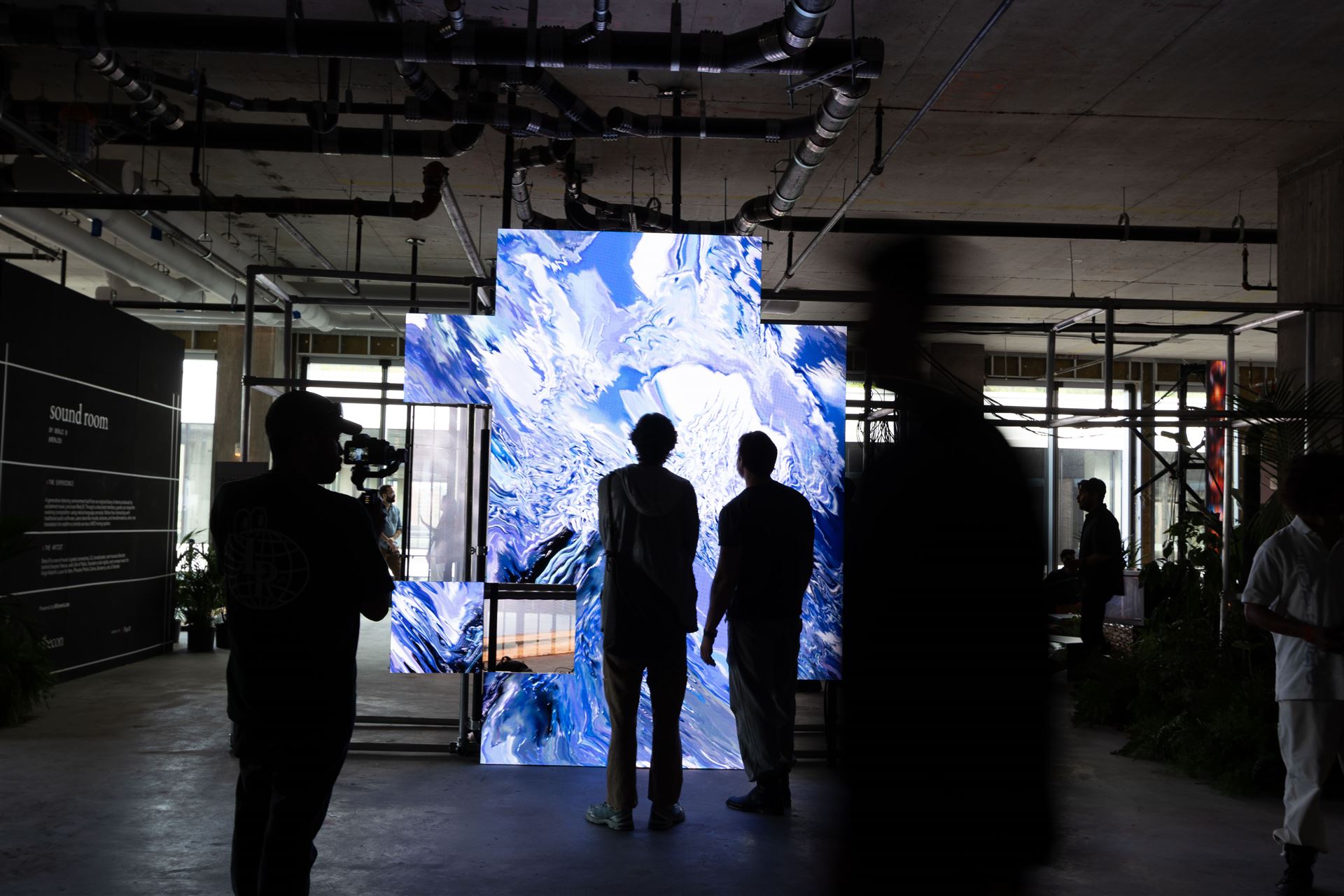
The Sound Room — a collaboration with British DJ Benji B — shows what the program was reaching for. Most conference installations perform a demo; this was an instrument. A visitor sits at two SSL UF8 motorized fader banks and sets eight bipolar axes — the emotional register they want a piece of music to occupy. That vector is sent to a model that reasons about what those settings should mean sonically, then translates the decision into a specific set of per-stem effect parameters — EQ, saturation, space, motion — inside a live Ableton session. The faders don't just report the visitor's intent; once the model has acted, they physically move to their new positions and relabel to the individual stems — drums, bass, vocals, and the rest — so the visitor can then reach in and remix the result by hand.
The interesting engineering problem wasn't the audio effects, which are standard production tools. It was making a language model's output land as physical, felt motion on hardware faders in real time, reliably enough to run unattended on a conference floor for a full event.
Vibecon ran June 17–18, 2026, at Canyon on Manhattan’s Lower East Side.