Abstract
This paper explores the intersection of strategic communication, social impact, and experience design in addressing interconnected and complex social issues that pose challenges to understanding and collective action. It emphasizes the need for data-driven communication strategies to navigate the complexities of these crises and generate action. Leveraging insights from social science research, the paper highlights the importance of tailored strategic communication that acknowledges and addresses the diverse motivations shaping individuals’ thoughts, emotions, and actions toward social issues. Drawing upon research from the Yale Program on Climate Change Communication, the paper examines population segmentation based on beliefs and attitudes toward climate change issues in the United States. These population segments are utilized to develop targeted communication strategies most likely to appeal to individuals’ needs and desires. Finally, the paper identifies opportunities for further research, including the development of communication strategies for other social impact issues and the exploration of evaluation methods for assessing the social impacts of design interventions.
What the paper argues
Experience designers working on social-impact issues default to a single strategy: make the message more compelling. This paper argues that’s the wrong lever when an audience is already segmented by belief. Drawing on the Yale Program on Climate Change Communication’s “Six Americas” segmentation — from Alarmed to Dismissive — it lays out how experience designers can match a communication strategy to where a specific audience segment already stands, rather than writing one message and hoping it lands with everyone who walks through the door.
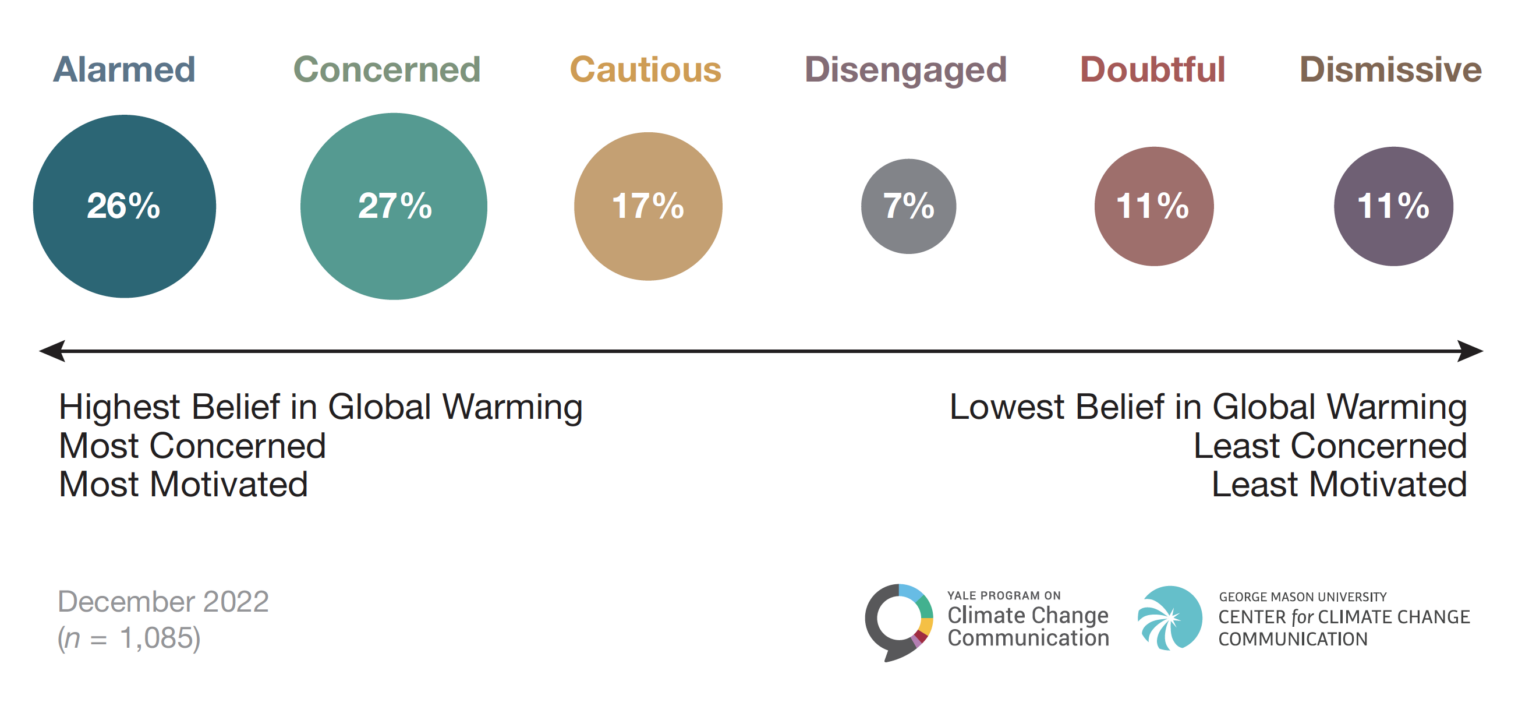
This audience-segmentation approach is the direct precursor to the design research in Social Legibility in Experiential Design, this paper’s 2026 follow-up applied in a live exhibit at the Yale Peabody Museum, and underlies the audience-research behind our environmental communication practice. Read the preprint