Abstract
We compared two ways of teaching museum visitors about Tiktaalik, an early fossil animal that sits close to the origin of life on land: a short narrated video and a self-guided interactive prototype. Both carried the same information. Ten adults each experienced one of the two formats and talked us through what they learned. Going in, we expected the interactive version to teach more, on the assumption that active exploration beats passive watching. The opposite happened. Video viewers came away with a firmer grasp of why Tiktaalik matters, while prototype users learned the animal’s anatomy in finer detail but more often missed the larger point. The two formats did not differ in quality so much as in what they made easy to understand. This report documents the study and recommends a hybrid design that keeps the video’s clear storyline while adding the prototype’s moments of hands-on detail. These are patterns from a small, exploratory study, not statistical claims.
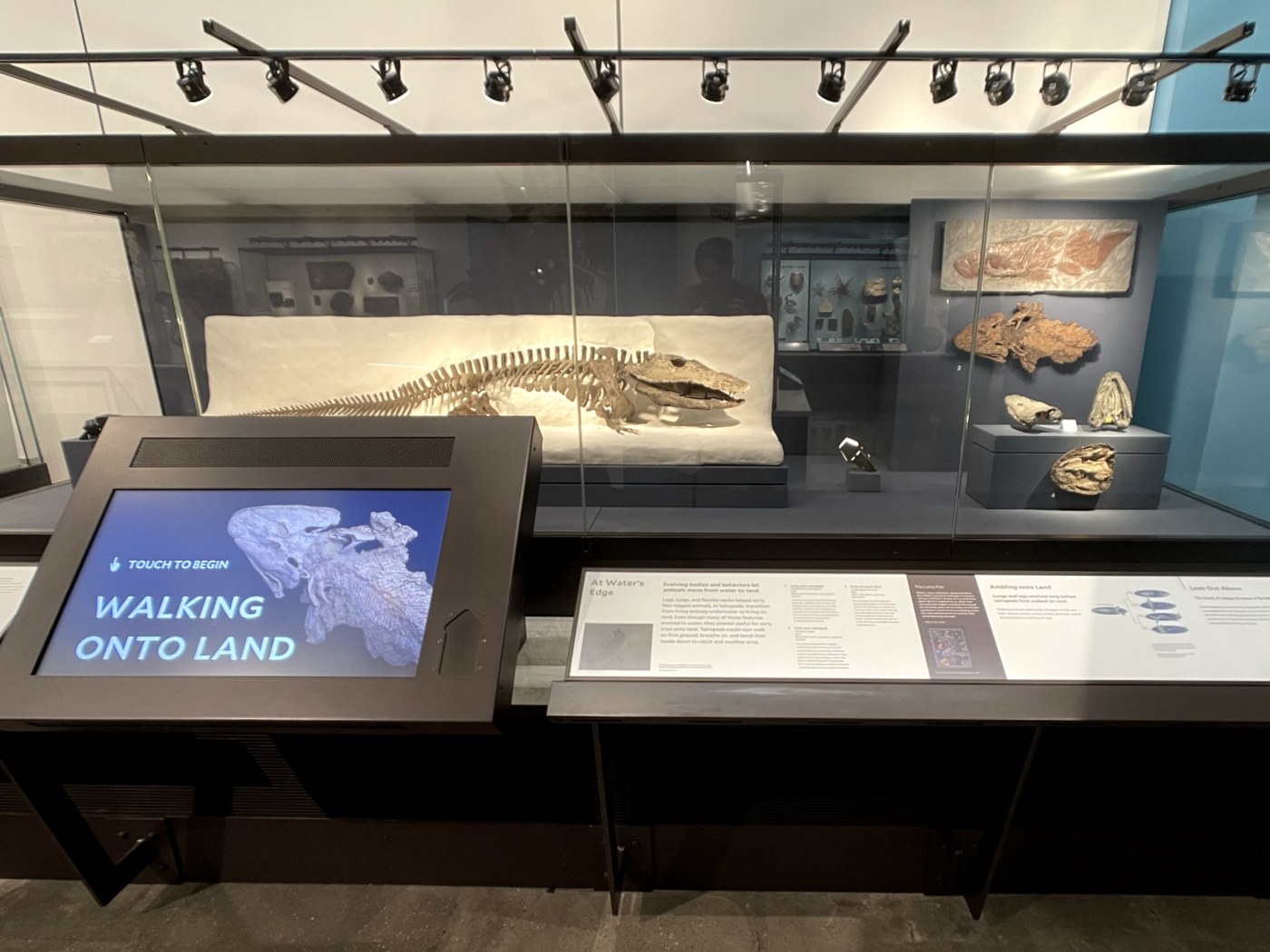
What the study found
Ten adults, recruited to resemble a general museum audience, were split five to a narrated video and five to a self-guided interactive prototype covering the same content: the fossil evidence for Tiktaalik’s place in the fish-to-land transition, and how such an animal actually moved. Video viewers more reliably came away with the “big picture” — why this transitional species matters — while interactive-prototype users noticed and retained more anatomical detail, but more often lost the thread of why it mattered. Rather than one format beating the other, each made a different kind of understanding easy. The report’s recommendation is a hybrid: keep a guided narrative spine, and add interactive pauses for hands-on anatomical detail at the moments that call for it.
This exhibit and study were conducted at the Yale Peabody Museum, as part of Sitara’s broader interpretive work there. Read the full report