Abstract
Near-field communication (NFC) lets a smartphone act on a physical object through a brief, contactless gesture, which makes it valuable for embedding interactivity in public installations where a visible reader or a printed code would be intrusive. In practice, people who are not told they are using NFC often cannot complete the interaction at all. This report gathers what is known about instructing non-expert users of NFC smart objects. It draws on two sources: the published HCI literature on NFC interaction, discoverability, and the design theory of affordances and feedforward; and a two-round formative field study we ran on a permanent installation, in which no participant could trigger the interaction under written instructions alone, while a revised design that showed the gesture as motion took four of five to independent success. We consolidate both into a short set of best practices: avoid payment- and scan-laden language, show the gesture rather than name the technology, supply on screen the signifier the object cannot carry, guide the two-axis search for the phone’s reader, and confirm success explicitly.
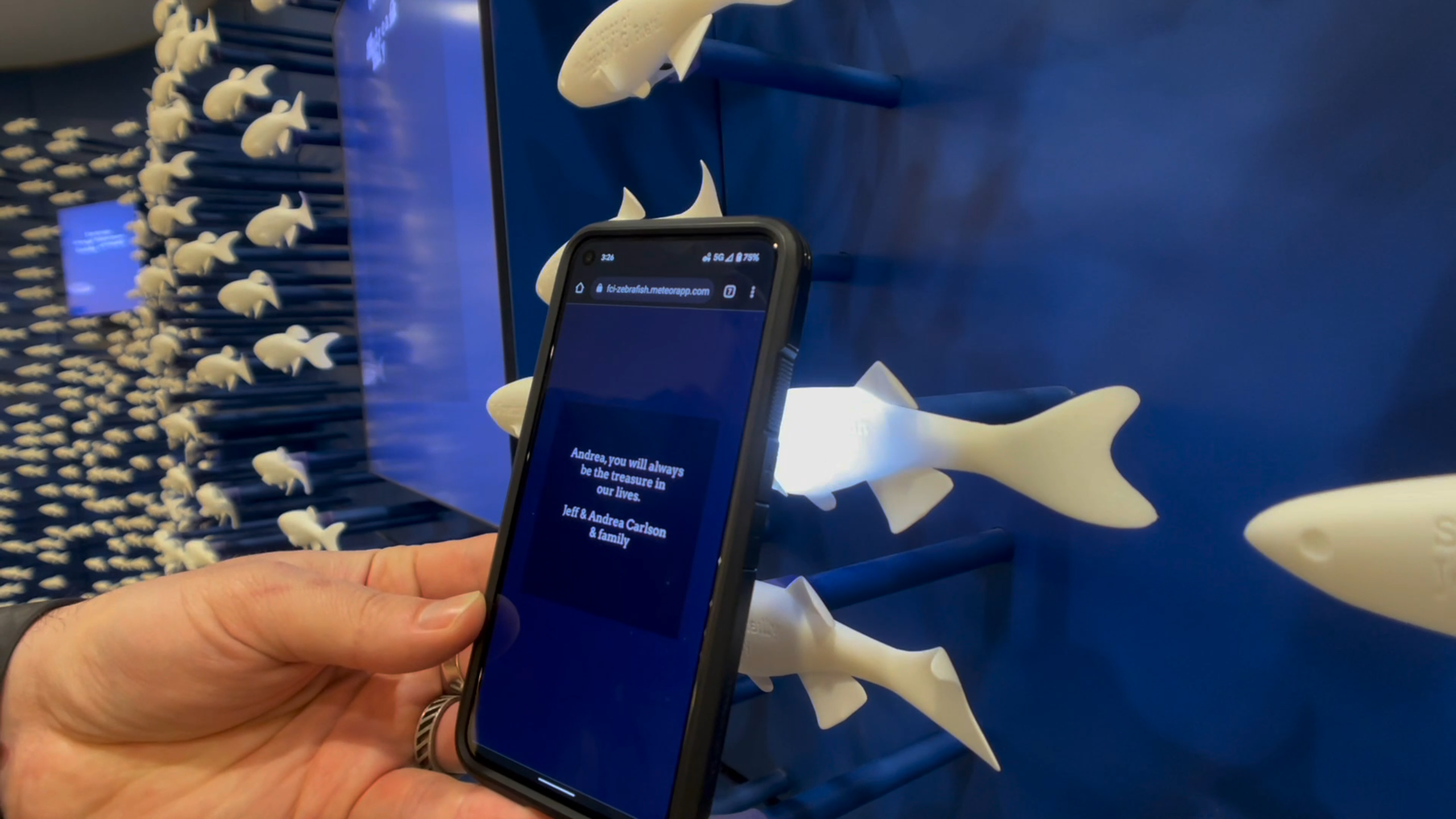
What the study found
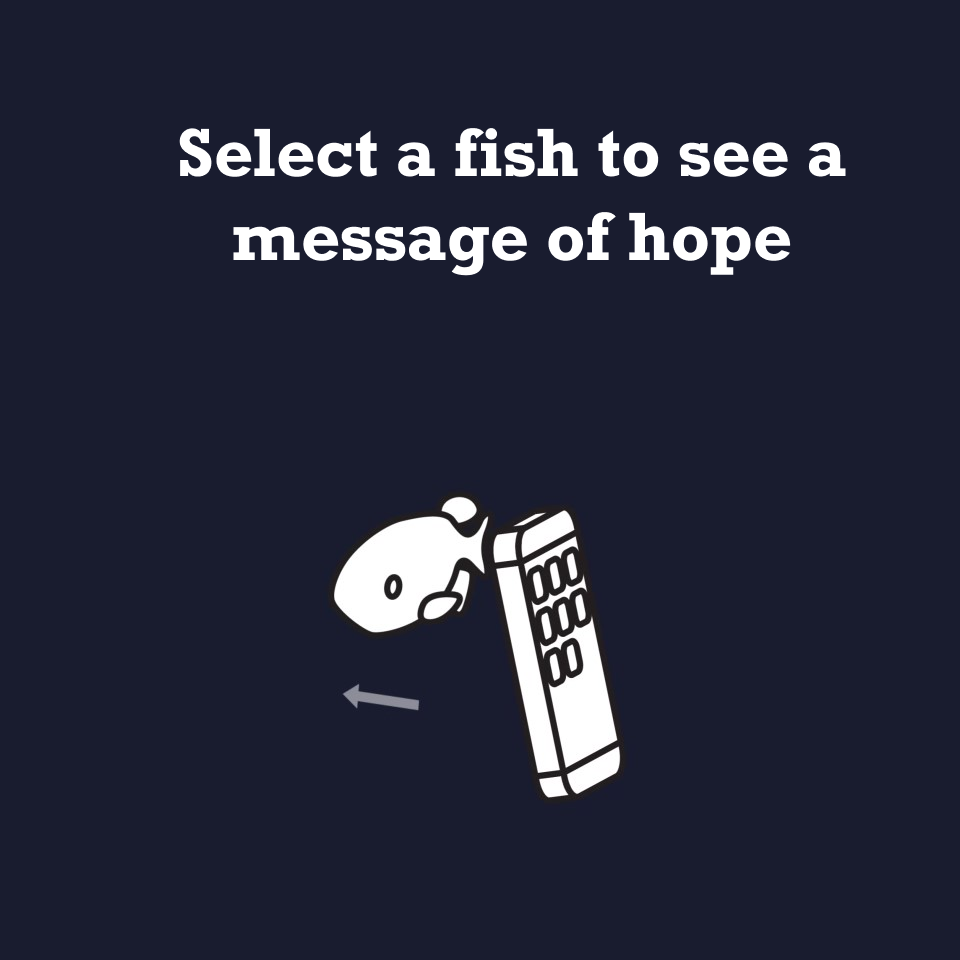
Testing five instruction sets — including no text at all — against a tabletop prototype, no participant completed the interaction unaided under any wording: people read “contactless scan” as a payment prompt, read “scan a fish” as a QR code and opened their camera, or pressed their phone directly against the instruction screen instead of the object. A revised design dropped the technology name entirely and showed the gesture as a two-step motion graphic — move the phone close, then search slowly for the reader — and four of five participants completed the interaction with no help at all.
The study was conducted on the Dana-Farber zebrafish display’s 2021 NFC retrofit, where 477 individually-tagged 3D-printed fish could carry no visible mark of any kind — pushing the instructional burden entirely onto the screen. Read the full report