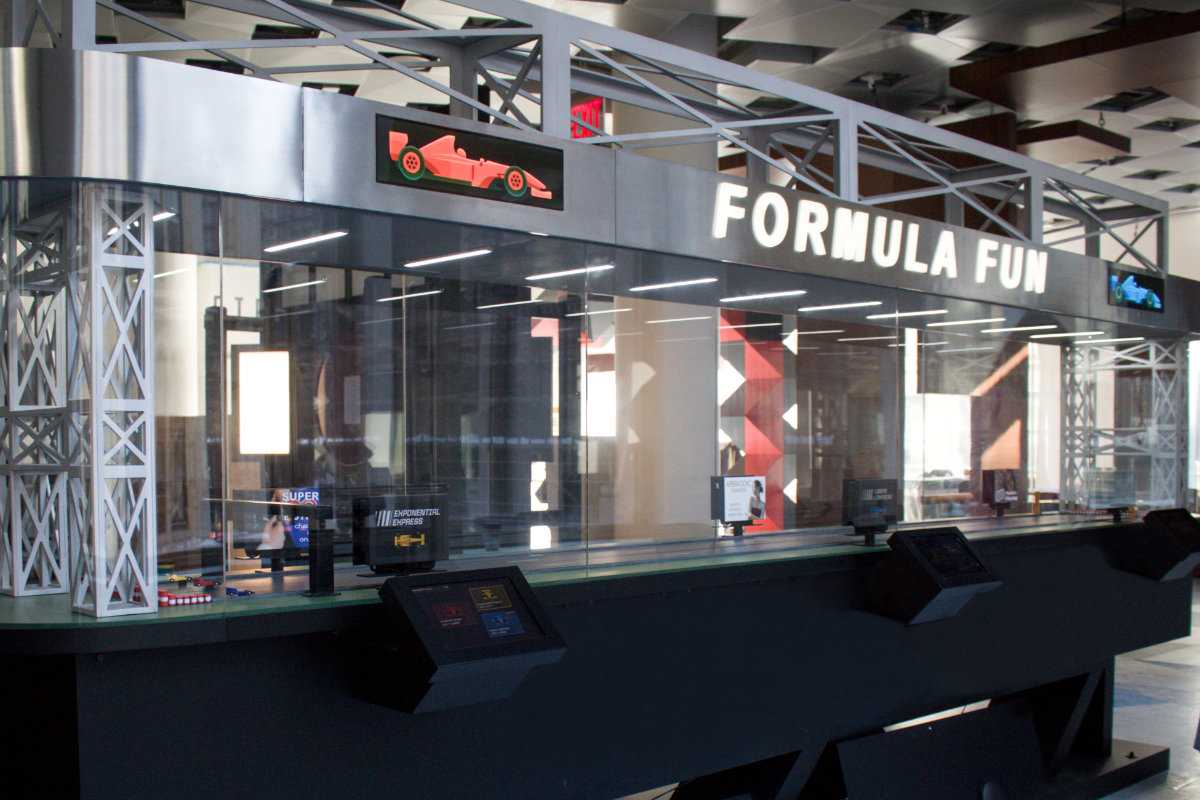
A museum built entirely around one subject has a harder design problem than it looks like: every exhibit has to make a different piece of that subject physical, without repeating the same trick twice. Sitara developed the software for four installations in a new gallery at the National Museum of Mathematics — Formula Fun, Face Value, Global Golf, and Open Book — each translating a distinct mathematical concept into a hands-on interaction rather than a diagram.
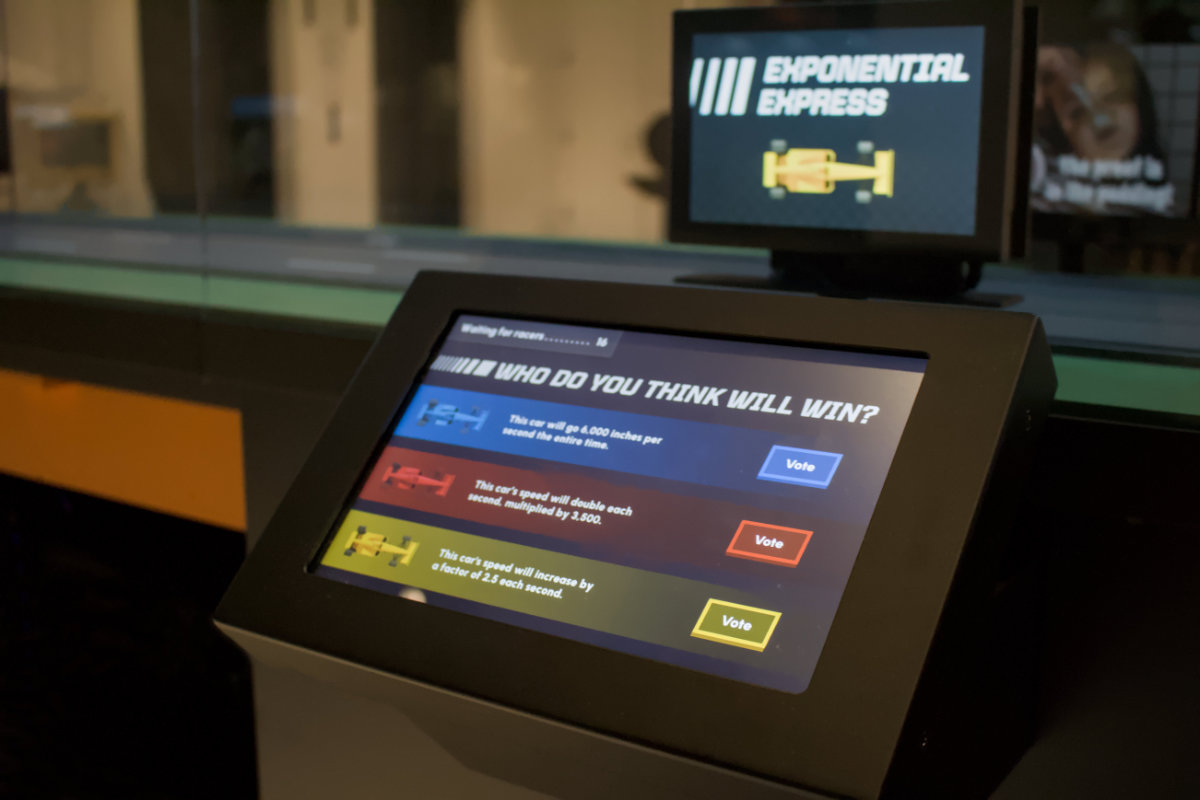
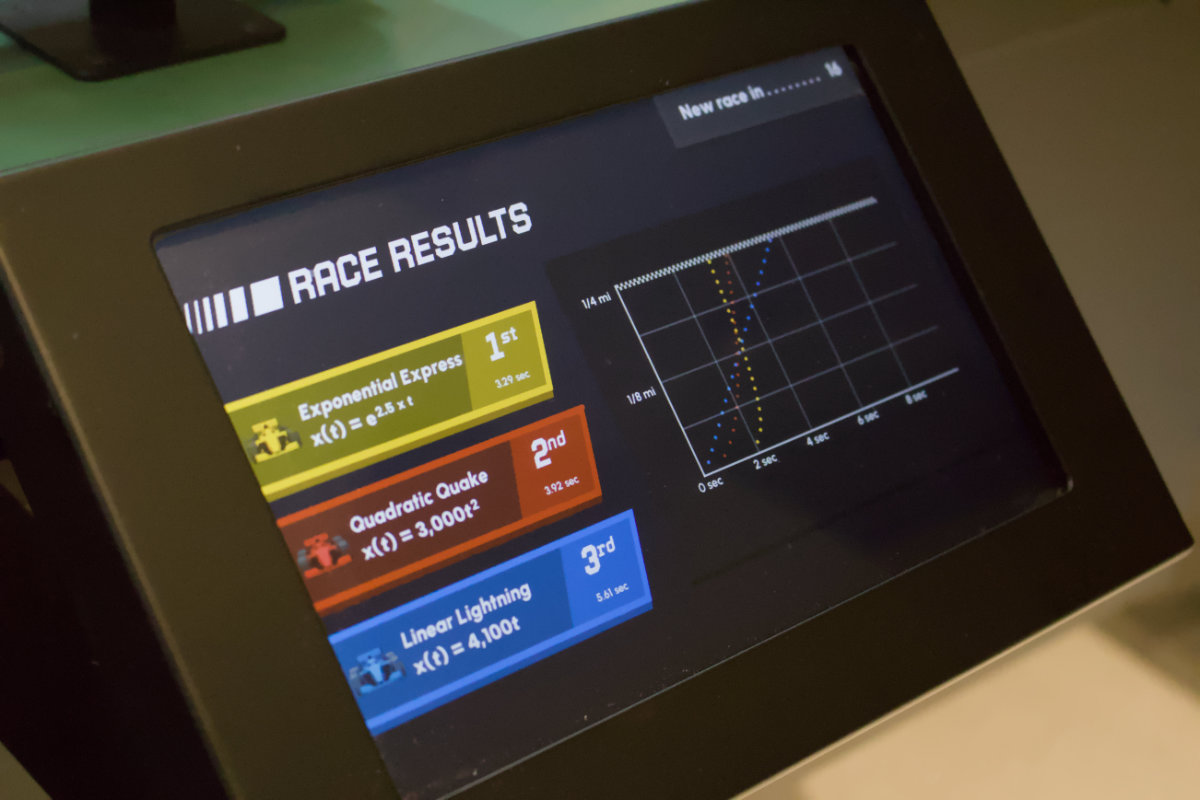
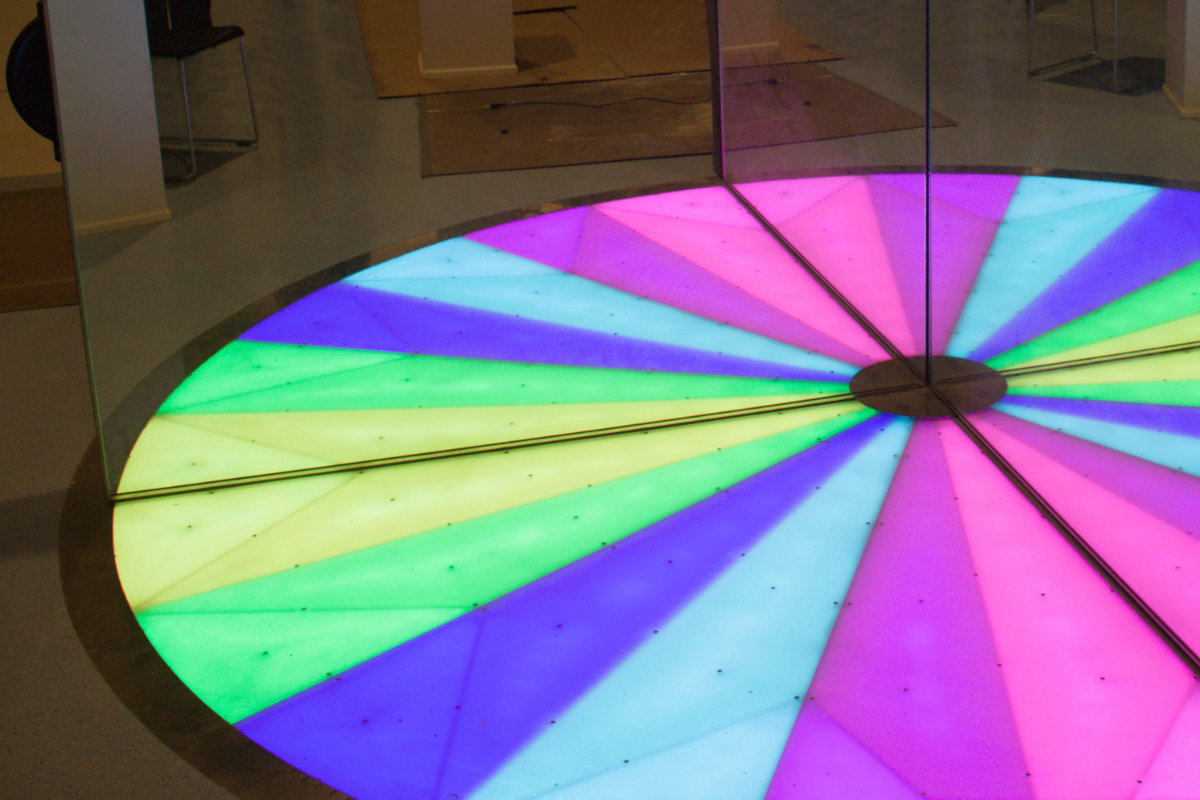
The four span a wide range of interaction models: Formula Fun turns growth rates into a predictable-yet-surprising drag race across three touchscreen stations; Face Value builds number sense through physical, countable feedback; Open Book uses a mirrored, moving surface to make angle and reflection something you walk into rather than read about; and Global Golf turns geodesic math into a golf game — players choose a target city anywhere in the world and try to land a shot on it from New York, aiming with both a spherical globe display and a standard flat map and deciding for themselves which reference is actually telling them the truth. Each one required its own interface logic and its own answer to the same question — what does this idea feel like in your hands, not just look like on a screen?
Global Golf carries its own teaching point: every flat map is a projection, and every projection breaks something. A straight line on the 2D map isn't necessarily the shortest path in the real, curved world — and a shot that looks obviously correct on the cartesian grid can go badly wrong once you check it against the sphere. The exhibit doesn't tell visitors which display to trust; it lets a missed shot make the case that intuition about straight lines and direction shifts depending on where you are on the globe.
MoMath's own design brief asked for a technical approach built to run for roughly a decade under its internal IT team, without locking the museum into a single vendor's proprietary stack. Sitara's software followed accordingly — conventional, well-documented, maintainable frameworks rather than exotic tooling, full source and build documentation for every exhibit, and a repo structure legible to a small internal team rather than a large studio.
Interactive math is a strange kind of design brief: the concept has to survive contact with a ten-year-old, and it has to be mathematically honest at the same time. That tension — playful enough to pull someone in, rigorous enough to actually teach the idea — is the same discipline behind every exhibit Sitara builds, whether the subject is number theory or civic memory.